8 Kolleno Alternatives & Competitors in 2026
Kolleno: What It Does and Why Teams Look for Alternatives
Kolleno is a New York-based collections platform founded in 2019, before the current generation of AI technology. The platform automates payment reminders through rule-based, deterministic workflows. AR teams build collection sequences by defining each node in the workflow with if-this-then-that logic: if an invoice is 30 days overdue, send template A; if no response after 7 days, send template B; if the customer is in segment X, escalate to a manager. Every branch and condition must be mapped out in advance. Kolleno offers AI functionality such as a chatbot copilot that assists with workflow configuration and predictive scoring to prioritise tasks. Kolleno also offers a customer payment portal, which is well-built and gives customers a self-service interface to view and pay invoices.
AR teams evaluating Kolleno alternatives typically do so for one of two reasons. Some are looking for a platform that handles inbound billing queries alongside outbound collections. AR teams today often work in both Kolleno and a shared email inbox or ticketing system to manage AR process. Others are looking for a product that is AI-native and supports agentic collection workflows.
Top 3 Alternatives to Kolleno
Platform | Best For |
Paraglide | AR teams that want an AI-native solution where AI agents automate invoice queries, disputes, and end-to-end collections |
Chaser | Cheapest alternative for micro-SMBs that need basic payment reminders |
Credithound | UK-focused credit control for small to mid-sized businesses |
1. Paraglide: AI Agents for Accounts Receivable and Collections
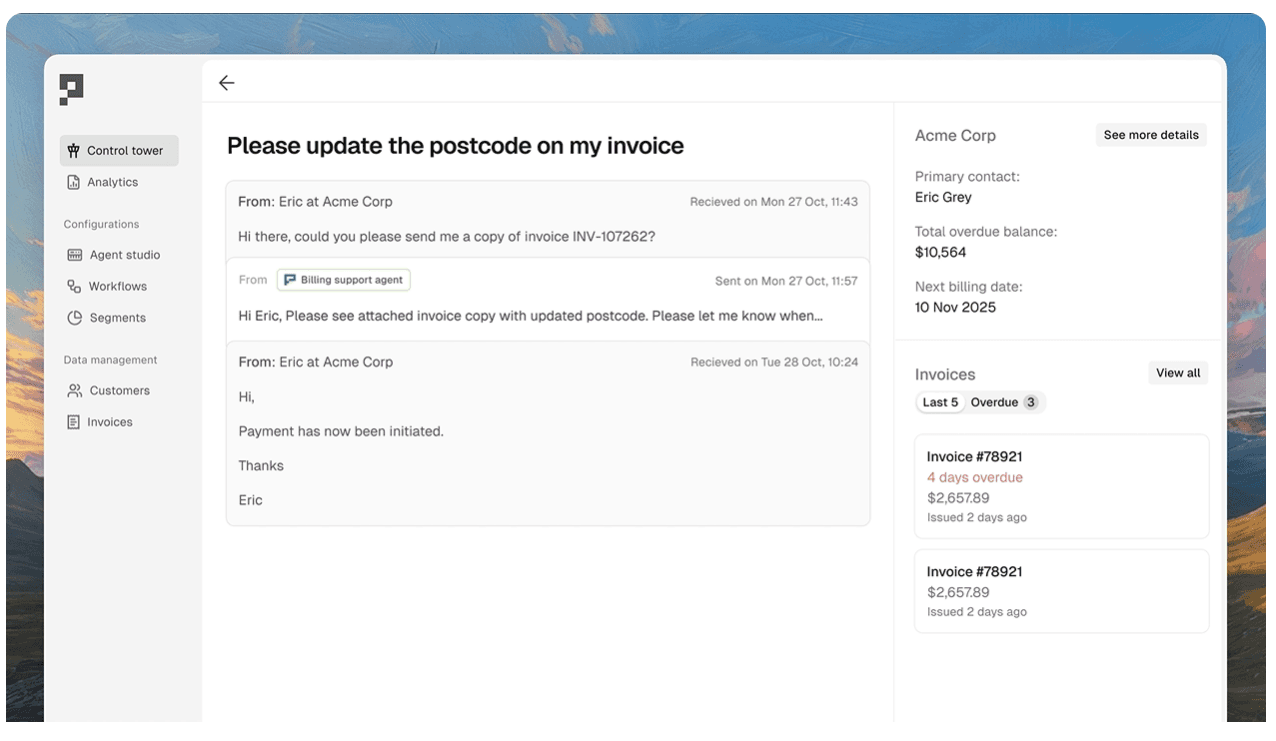
Kolleno vs Paraglide: Rule-Based Reminders vs AI-Native Collections
Paraglide builds AI agents for accounts receivable and collections. The Billing Support Agent automates replies to customers' queries in the finance inbox. The Collections Agent personalises collections at scale, automating outreach, replies, and follow-ups. While other collections software sends templated payment reminders that customers ignore, Paraglide automates the full end-to-end conversation, including replies to payment reminders and follow-ups. Paraglide's AI agents follow up in existing email threads with the full context of all previous conversations and payment history, so every interaction picks up exactly where the last one left off. Paraglide also manages disputes, deductions, and credit approvals.
Paraglide is AI-native. That means the product is architected from the ground up with agents in mind. Previous generations of accounts receivable software gave humans tools to do their job more efficiently. AI-native agentic solutions like Paraglide provide agents that actually do the work: reading billing queries, responding to customers, resolving disputes, and handling collections conversations from first contact to payment. The role of humans shifts from doing the work to approving and monitoring the work that agents do. Every other platform on this list was built to help humans work faster. Paraglide was built to do the work itself.
The difference from Kolleno is architectural. Kolleno requires the AR team to map out every possible scenario in advance and does not handle inbound billing queries at all. Paraglide's agents handle the full conversation: the reminder, the customer's query, the follow-up, the dispute, and every exchange in between. AR teams using Paraglide do not need a shared inbox or ticketing system alongside their AR platform. The agents operate in the finance inbox itself.
Paraglide customers reduce DSO by an average of 34%. That reduction is driven by faster resolution of the billing queries, disputes, and process gaps that actually block payment.
Implementation takes less than ten days. The platform is designed to be easy to use and easy to implement, with no complex configuration, no consultant-led deployment, and no months of onboarding before the AR team sees results.
Key features: AI Billing Support Agent, AI Collections Agent, AI Credit Agent, invoice inquiry management, dispute and deduction management, human-in-the-loop workflows, 24/7 coverage, full thread context, capturing promise-to-pay dates, and capturing PO numbers.
Pricing: available on request.
Best for: B2B companies with high invoice volumes where AR teams are drowning in their finance inboxes, handling billing queries, disputes, and collections conversations manually. Paraglide is the AI-native solution where agents automate the work end-to-end.
2. Chaser: Simple Payment Reminders for Small Businesses
Kolleno vs Chaser: Mid-Market Platform vs SMB Reminder Tool
Chaser is a payment reminder tool built for small businesses and micro-SMBs. It integrates with Xero, QuickBooks, and other SMB accounting platforms, and automates the sending of payment reminders based on overdue invoices. Setup is fast, pricing is low, and the product does exactly one thing well: send reminders on schedule. For small businesses that need basic collections automation without investing in a full AR platform, Chaser is a cost-effective choice.
Chaser is not a like-for-like Kolleno replacement. It lacks the workflow depth, segmentation, and dashboards that mid-market AR teams expect. It does not offer a customer payment portal. But for teams that find Kolleno's if-this-then-that workflow configuration more complex than their operation requires, Chaser provides a simpler, cheaper alternative that covers the basics.
Like Kolleno, Chaser's workflows cannot automatically handle inbound billing queries with context of the previous conversation. AR teams still handle inbound billing queries manually.
For AR teams comparing Kolleno vs Chaser, the trade-off is capability for simplicity. Teams moving from Kolleno to Chaser are accepting fewer features in exchange for lower cost and faster setup.
Key features: automated payment reminders, debtor management, payment portal, Xero and QuickBooks integration.
Pricing: published on website. Lowest-cost option on this list.
Best for: micro-SMBs and small businesses that need to automate simple payment reminders at low cost.
3. Credithound: UK Credit Control for Small Businesses
Kolleno vs Credithound: Collections Platform vs Credit Control Tool
Credithound is a UK-focused credit control platform built for small to mid-sized businesses. The platform provides debtor tracking, payment reminders, account management, and credit control workflows. It is designed for UK finance teams managing credit control processes, with features tailored to the UK market including aged debtor reporting and credit limit management.
Credithound serves a narrower use case than Kolleno. It is a credit control tool rather than a full collections automation platform. For UK-based SMBs whose primary need is managing debtor risk and sending basic payment reminders, Credithound provides a focused, market-specific solution.
Like Kolleno, Credithound's workflows cannot automatically handle inbound billing queries with context of the previous conversation. AR teams still handle inbound billing queries manually.
For AR teams comparing Kolleno vs Credithound, Kolleno offers more workflow depth and a customer payment portal. Credithound offers UK-specific credit control features at a simpler, more focused level.
Key features: credit control workflows, debtor tracking, aged debtor reporting, credit limit management, payment reminders.
Pricing: available on request.
Best for: small to mid-sized UK businesses that need credit control workflows and debtor management.
4. Invoiced: Billing and Collections with Analytics
Kolleno vs Invoiced: Workflow-First vs Analytics-First
Invoiced is a billing and collections platform that covers invoicing, payment reminders, and AR management. Its analytics and cash flow forecasting capabilities are its differentiating feature, giving finance teams detailed visibility into receivables performance, payment trends, and projected cash inflows. Invoiced's billing features extend beyond pure collections into invoice delivery and payment processing, making it a broader billing platform than Kolleno.
The platform sends automated payment reminders and provides collections dashboards and reporting.
Like Kolleno, Invoiced's rule-based workflows cannot automatically handle inbound billing queries with context of the previous conversation. AR teams still handle inbound billing queries manually.
For AR teams comparing Kolleno vs Invoiced, Kolleno offers deeper workflow configuration and a customer payment portal. Invoiced offers stronger analytics and broader billing capabilities. The choice depends on whether workflow control or reporting depth is the priority.
Key features: AR analytics, cash flow forecasting, invoicing, payment reminders, collections dashboards, payment processing.
Pricing: published on website.
Best for: mid-market companies that want AR analytics and cash flow forecasting alongside billing and basic collections.
5. Versapay: Digital Invoicing Portal with Flexible Payments
Kolleno vs Versapay: Collections Workflows vs Payment Portal
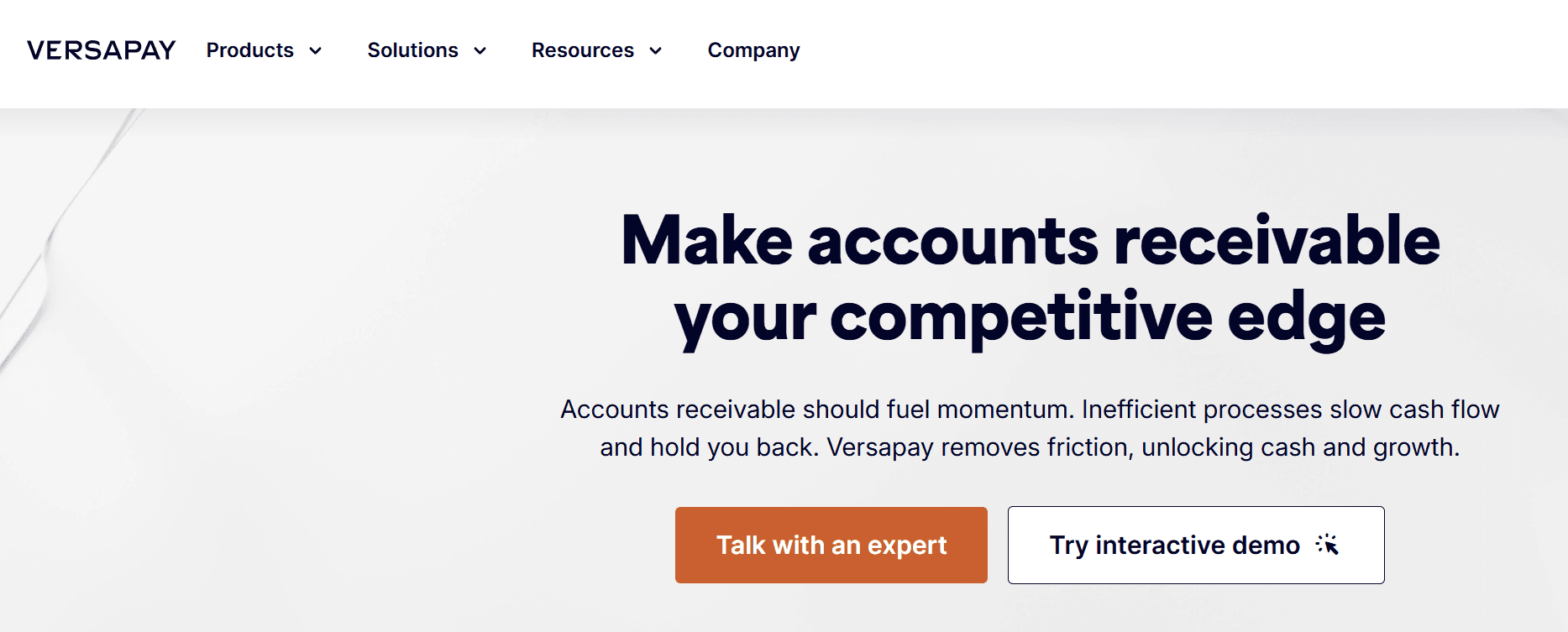
Versapay is a collections and invoicing platform founded in 2006, built around a digital invoice presentment and payment portal. Its core strength is offering flexible payment options through a self-service interface where customers can view invoices, select payment methods, and process payments directly. For AR teams whose primary bottleneck is payment friction rather than collections workflow management, Versapay's portal reduces the steps between invoice delivery and payment.
The platform sends automated payment reminders and provides AR dashboards and collections workflows. The invoicing portal supports multiple payment methods, giving customers flexibility in how they pay.
Like Kolleno, Versapay's rule-based workflows cannot automatically handle inbound billing queries with context of the previous conversation. The portal gives customers a place to pay, but when a customer has a question about an invoice, a PO number discrepancy, or a dispute, the AR team still handles that interaction manually.
For AR teams comparing Kolleno vs Versapay, both offer customer-facing portals, though with different emphases. Kolleno's portal focuses on payment. Versapay's portal focuses on invoice presentment and flexible payment options.
Key features: digital invoicing portal, flexible payment options, payment reminders, AR dashboards, collections workflows.
Pricing: available on request.
Best for: B2B companies where payment friction is the primary DSO driver and customers would benefit from a self-service invoicing and payment portal.
6. Satago: Collections for Small Businesses and Accountants
Kolleno vs Satago: Mid-Market Workflows vs SMB and Accountant Focus
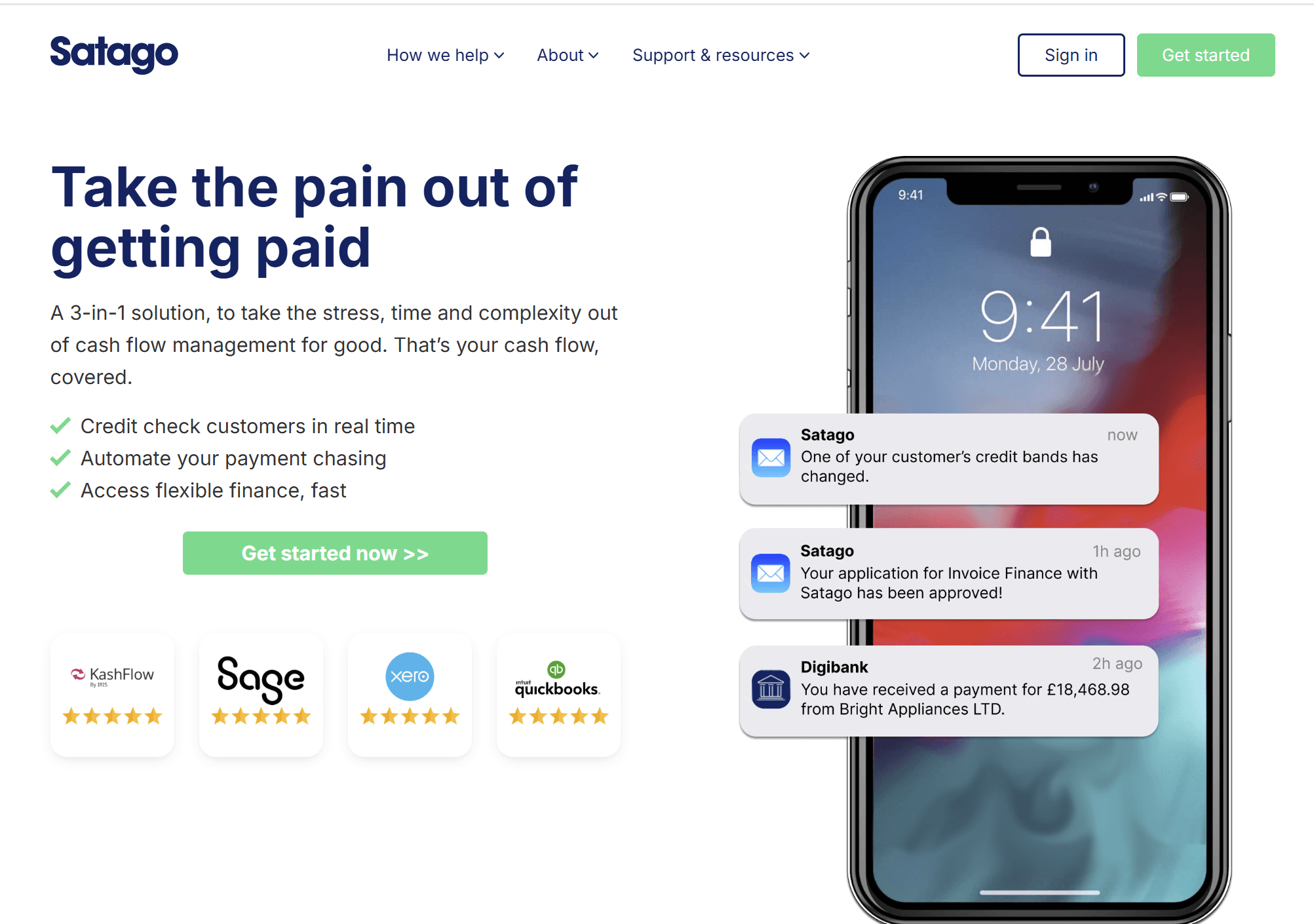
Satago is a UK-based collections platform built for small businesses and accounting firms. The platform integrates with accounting software including Sage and Xero, and automates payment reminders alongside credit checking and invoice management. Satago's positioning toward accountants and their clients makes it distinct from Kolleno, which serves in-house finance teams at mid-market companies.
For small businesses that work closely with their accountant on credit control and collections, Satago provides a shared toolset that both parties can use. The platform is straightforward to set up and its pricing is published on its website.
Like Kolleno, Satago does not handle inbound billing queries automatically. AR teams and accountants manage billing queries manually.
For AR teams comparing Kolleno vs Satago, Kolleno offers deeper workflow configuration and a customer payment portal for mid-market teams. Satago offers a simpler, accountant-friendly platform for small businesses with published pricing.
Key features: automated payment reminders, credit checking, invoice management, Sage and Xero integration, accountant collaboration tools.
Pricing: published on website.
Best for: small businesses and accountants that need collections automation integrated with their accounting software.
7. Plooto: Payments and Cash Flow for Small Businesses
Kolleno vs Plooto: Collections Automation vs Payment Management
Plooto is a payments and cash flow management platform serving small businesses in Australia and New Zealand. The platform covers both accounts payable and accounts receivable, providing payment processing, invoice management, and cash flow tracking. Plooto's strength is local support during ANZ business hours and a platform designed for the specific payment infrastructure and banking systems used in that region.
Plooto is not a dedicated collections platform in the way Kolleno is. Its AR capabilities are part of a broader payments suite rather than a purpose-built collections workflow engine. For ANZ-based small businesses that want AP and AR in one platform with local support, Plooto provides a regionally focused option.
Like Kolleno, Plooto does not handle inbound billing queries automatically. AR teams manage billing queries manually.
For AR teams comparing Kolleno vs Plooto, Kolleno offers significantly deeper collections workflows, segmentation, and a customer payment portal. Plooto offers combined AP/AR functionality with local ANZ support. The two serve different needs and different markets.
Key features: payment processing, accounts payable and receivable, invoice management, cash flow tracking, ANZ local support.
Pricing: available on request.
Best for: small businesses in Australia and New Zealand that want combined AP and AR payment management with local support.
8. Paidnice: AR Automation with SMS for Small Businesses
Kolleno vs Paidnice: Mid-Market Collections vs SMB Text Reminders
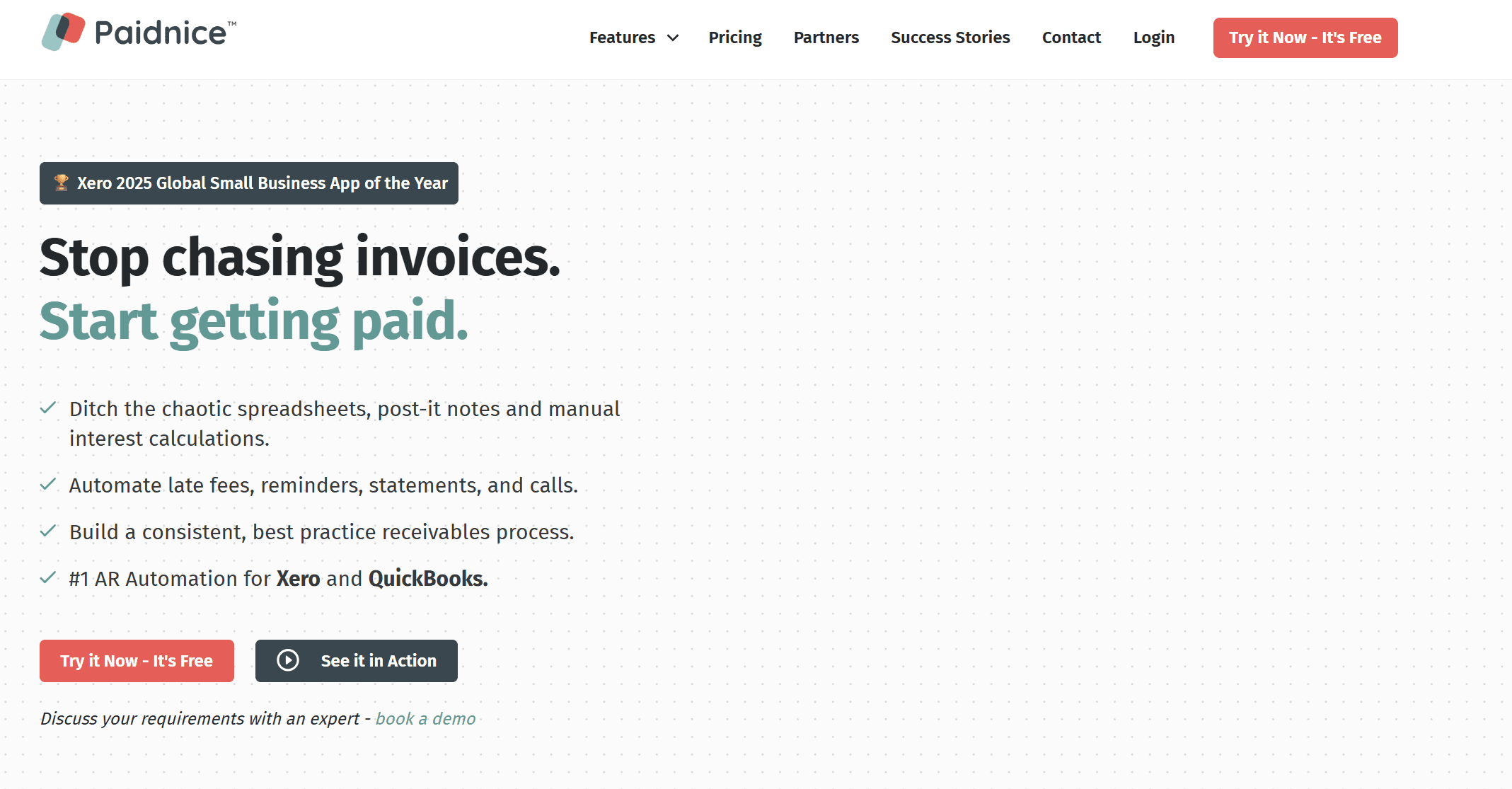
Paidnice is an AR automation platform for small businesses, built around Xero integration. Its differentiating feature is the ability to send automated payment reminders via SMS alongside email, giving small businesses a multi-channel approach to collections without the complexity of a full workflow engine. Paidnice focuses on making collections simple and direct for businesses with smaller invoice volumes.
Paidnice is not a mid-market collections platform. It does not offer the workflow depth, segmentation, dashboards, or customer payment portal that Kolleno provides. But for small businesses on Xero that want automated reminders across email and text without configuring complex dunning sequences, Paidnice provides a lightweight, focused solution.
Like Kolleno, Paidnice does not handle inbound billing queries automatically. AR teams manage billing queries manually.
For AR teams comparing Kolleno vs Paidnice, Kolleno offers far more collections depth for mid-market teams. Paidnice offers SMS-based reminders and simplicity for small businesses on Xero.
Key features: automated payment reminders via email and SMS, Xero integration, invoice management, multi-channel collections.
Pricing: available on request.
Best for: small businesses on Xero that want automated payment reminders via text and email without complex workflow configuration.
Full Kolleno Comparison: All 8 Alternatives and Competitors
Platform | Key Features | Automation | Inbound Query Handling | Thread Context | Collections Personalisation | Best For |
Kolleno | Rule-based workflows, customer portal, dunning | Rule-based | No | No | Template merge fields | Mid-market with need for payment portals |
Paraglide | AI agents for collections, billing queries, disputes, credit | Agentic AI | Autonomous handling via AI agents | Yes | AI-generated, contextual | B2B with high invoice volume |
Chaser | Automated reminders, debtor management | Rule-based | No | No | Template merge fields | Micro-SMBs, simple reminders |
Credithound | Credit control, debtor tracking, reminders | Rule-based | No | No | Template merge fields | UK SMBs, credit control |
Invoiced | Analytics, cash flow forecasting, billing, collections | Rule-based | No | No | Template merge fields | Mid-market, analytics and billing |
Versapay | Digital invoicing portal, flexible payments, collections | Rule-based | No | No | Template merge fields | Companies needing payment portal |
Satago | Credit checking, reminders, accountant tools | Rule-based | No | No | Template merge fields | Small businesses and accountants |
Plooto | AP/AR payments, cash flow, invoice management | Rule-based | No | No | Template merge fields | ANZ small businesses |
Paidnice | Email and SMS reminders, Xero integration | Rule-based | No | No | Template merge fields | SMBs on Xero, SMS reminders |
AI Copilots, AI Agents, and Why Architecture Matters in AR Software
The accounts receivable software market is going through the same architectural shift that enterprise software experienced when the industry moved from on-premise to cloud. When that transition happened, incumbents did not rebuild their products. They hosted existing software in a data centre and called it cloud. Companies that were cloud-native, built from the ground up for cloud delivery, had a structural advantage that the retrofitted products never closed. The architecture was different. The deployment model was different. The speed of iteration was different. No one knows this better than Amazon, writing about it here
The same pattern is playing out with AI. Platforms built before ChatGPT and the current generation of large language models were architected around rule-based workflows where every scenario must be pre-programmed by a human. These platforms struggle to transition to AI-native architectures because the foundation was not built for it. Adding AI features on top of a deterministic workflow engine does not make the platform AI-native, just as hosting on-premise software in a data centre did not make it cloud-native. The Boston Consulting Group (BCG) wrote an article about this here
Some platforms have added copilots: chat interfaces that help users interact with the existing system. A copilot helps a human do the work. The human still handles every inbound billing query. The human still manages every customer interaction. Humans still resolve every dispute. The copilot makes humans faster at certain tasks within the existing workflow. Kolleno's chatbot copilot, for example, helps AR teams configure their rule-based workflows more quickly. It is a useful productivity feature. It does not change what the workflows do once they are running.
An agent is fundamentally different. An agent does the work. It reads the billing query, retrieves the invoice data, responds to the customer, follows up in the existing thread, and routes complex cases to the right person with full context. The human's role shifts from doing the work to approving and monitoring the work the agent does.
A copilot layered on top of a pre-LLM architecture helps configure a workflow faster. An agent replaces the need for that workflow entirely. The workflow exists because the software cannot think for itself, so the human must pre-program every scenario. When the software can read, understand, and act on context, the deterministic workflow becomes unnecessary.
Microsoft describes the important difference between co-pilots and agents here
AI-native platforms like Paraglide were built from the ground up after the LLM breakthrough, with agents as the core architecture. The agents are the product, not a feature added to an existing system. For AR teams evaluating Kolleno alternatives, this architectural distinction determines what the platform can and cannot do, regardless of how the marketing describes it.
How to Choose the Right Kolleno Alternative or Competitor
The right Kolleno alternative depends on where the real bottleneck sits in your AR operation.
If the primary problem is a high volume of inbound invoice queries piling up in a shared inbox or ticketing system while the AR team works in Kolleno for outbound, Paraglide is the only platform on this list that handles inbound billing queries automatically. The AI agents operate in the finance inbox itself, resolving queries end-to-end and eliminating the need for a second system.
If the primary problem is the disconnect between outbound reminders and inbound queries, with the AR team toggling between Kolleno and email to manage the full collections process, Paraglide consolidates both into one platform.
If the need is simplification and lower cost, Chaser provides basic reminders for SMBs, Paidnice offers SMS-based reminders for Xero users, and Satago serves small businesses and accountants with published pricing.
If the need is a self-service payment portal with flexible payment options, Versapay focuses on reducing payment friction at the point of invoice presentment.
If the need is UK credit control, Credithound provides focused debtor management for UK SMBs.
If the need is combined AP and AR with local support in Australia and New Zealand, Plooto provides a regionally focused payments platform.
If the need is stronger analytics alongside billing and collections, Invoiced offers reporting and cash flow forecasting.
For AR teams where the bottleneck is the billing queries, disputes, and follow-ups that sit between the reminder and the payment, the choice is Paraglide.