Gaviti is an Israel-founded collections platform launched in 2017, before the current generation of large language models. The platform serves mid-market B2B companies across a range of industries, automating dunning workflows through rule-based sequences tied to ageing buckets and customer segments. Its strongest capability is cash application, which plays a central role in how finance teams match incoming payments to open invoices and reduce manual reconciliation work.
Gaviti offers an AI chatbot that allows users to ask questions about their AR data. This is a reporting and query tool that helps humans navigate the platform, not an agentic system that handles collections conversations or resolves billing queries on behalf of the AR team.
Our top 3 Alternatives to Gaviti are:
Platform | Best For |
Paraglide | AR teams that want an AI-native solution where AI agents automate invoice queries, disputes, and end-to-end collections |
Chaser | Cheapest alternative for micro-SMBs that need basic payment reminders |
Credithound | UK-focused credit control for small to mid-sized businesses |
AR teams evaluating Gaviti alternatives typically fall into two groups:
Finance teams that need a platform that handles inbound billing queries and customer replies alongside outbound collections. Gaviti automates the reminder, but when a customer responds with a billing query, a dispute, or a request for documentation, the AR team manages that interaction in a shared email inbox or ticketing system outside of Gaviti.
Finance teams looking for agentic collections workflows where AI handles the full conversation automatically, rather than rule-based sequences that require every scenario to be mapped in advance.
What are the 8 Best Gaviti Alternatives for AR Teams in 2026?
Platform | Automated reminders | Inbound billing queries | Thread context | Personalised collections | Best for |
|---|
Gaviti | Yes | No | No | No | Mid-market B2B, cash application |
Paraglide | Yes | Yes | Yes | Yes | B2B finance teams with high invoice volume |
Credithound | Yes | No | No | No | UK SMBs, credit control |
MyDSO Manager | Yes | No | No | No | Credit risk management |
Chaser | Yes | No | No | No | Micro-SMBs, simple reminders |
Tesorio | Yes | No | No | No | Mid-market, cash flow forecasting |
Invoiced | Yes | No | No | No | Mid-market, analytics and billing |
Upflow | Yes | No | No | No | Mid-market SaaS, strong reporting |
Versapay | Yes | No | No | No | Companies needing a payment portal |
1. Paraglide: AI Agents for Accounts Receivable and Collections
Best for: B2B companies with high invoice volumes where AR teams are drowning in their finance inboxes, handling billing queries, disputes, and collections conversations manually.
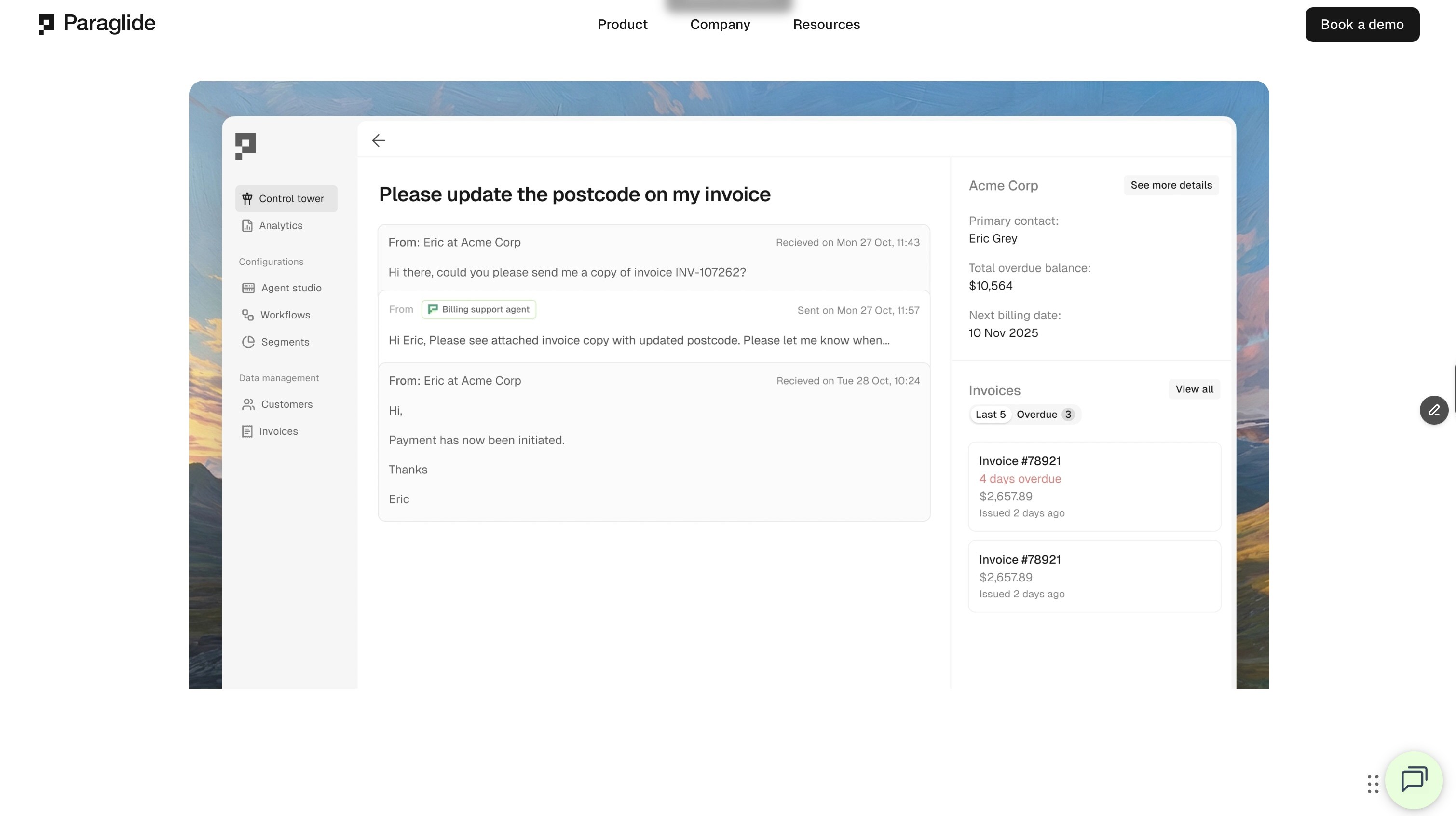
Paraglide builds AI agents for accounts receivable and collections. The Billing Support agent automates replies to customers' billing queries directly in the finance inbox. The Collection agent personalises collections at scale, automating outreach, replies, and follow-ups as complete conversations rather than one-off reminders. Paraglide's AI agents follow up in existing email threads with the full context of all previous conversations and payment history, so every interaction picks up exactly where the last one left off. Paraglide also manages disputes, deductions, and credit approvals.
Paraglide is AI-native. Previous generations of accounts receivable software gave humans tools to work more efficiently. AI-native agentic solutions like Paraglide provide agents that actually do the work: reading billing queries, responding to customers, resolving disputes, and managing collections conversations from first contact to payment. The role of humans shifts from doing the work to approving and monitoring the work that agents do.
Where Gaviti gives AR teams structured dunning workflows and cash application, Paraglide handles the collections conversation itself. AR teams using Paraglide do not need a shared inbox or ticketing system alongside their collections platform. The agents operate in the finance inbox, resolving inbound queries and managing outbound collections in one place.
Paraglide customers reduce DSO by an average of 34%. That reduction comes from faster resolution of the billing queries, disputes, and process gaps that actually block payment.
Implementation takes less than ten days. The platform is designed to be easy to use and easy to implement, with no complex configuration, no consultant-led deployment, and no lengthy onboarding process.
Key features
AI Billing Support Agent, AI Collections Agent, AI Credit Agent, invoice inquiry management, dispute and deduction management, human-in-the-loop workflows, 24/7 coverage, full thread context, capturing promise-to-pay dates, capturing PO numbers.
Pricing
Available on request.
2. Credithound: UK Credit Control for Small Businesses
Best for: Small to mid-sized UK businesses that need credit control workflows and debtor management.

Credithound is a UK-focused credit control platform for small to mid-sized businesses. The platform provides debtor tracking, payment reminders, account management, and credit control workflows tailored to the UK market, including aged debtor reporting and credit limit management.
Credithound operates in a different segment from Gaviti. It is a credit control tool built for UK SMBs rather than a mid-market collections automation platform. For UK-based businesses whose primary need is managing debtor risk and credit limits rather than running complex dunning sequences, Credithound provides a focused, market-specific option.
Like Gaviti, Credithound does not handle inbound billing queries automatically. AR teams manage billing queries manually.
For AR teams comparing Gaviti vs Credithound, Gaviti offers deeper collections workflows and cash application. Credithound offers UK-specific credit control features and a simpler, more focused product.
Key features
Credit control workflows, debtor tracking, aged debtor reporting, credit limit management, payment reminders.
Pricing
Available on request.
3. MyDSO Manager: Credit Risk Management and DSO Monitoring
Best for: Finance teams that prioritise credit risk management and DSO monitoring across their customer portfolio.

MyDSO Manager is a French-founded platform focused on credit risk management and DSO monitoring. The platform provides credit scoring, risk assessment, and receivables tracking, helping finance teams monitor credit exposure across their customer portfolio. For AR teams whose primary concern is credit risk visibility rather than collections automation, MyDSO Manager offers dedicated credit risk tooling that goes deeper than what Gaviti provides.
The platform includes collections workflows and payment reminders alongside its credit risk features, though its primary value is risk management and monitoring.
Like Gaviti, MyDSO Manager does not handle inbound billing queries automatically. AR teams manage billing queries manually.
For AR teams comparing Gaviti vs MyDSO Manager, Gaviti offers stronger dunning workflows and cash application. MyDSO Manager offers deeper credit risk scoring and DSO monitoring. The choice depends on whether the team's priority is collections efficiency or credit risk visibility.
Key features
Credit risk scoring, DSO monitoring, receivables tracking, credit management, collections workflows.
Pricing
Available on request.
4. Chaser: Simple Payment Reminders for Small Businesses
Best for: micro-SMBs and small businesses that need to automate simple payment reminders at low cost.
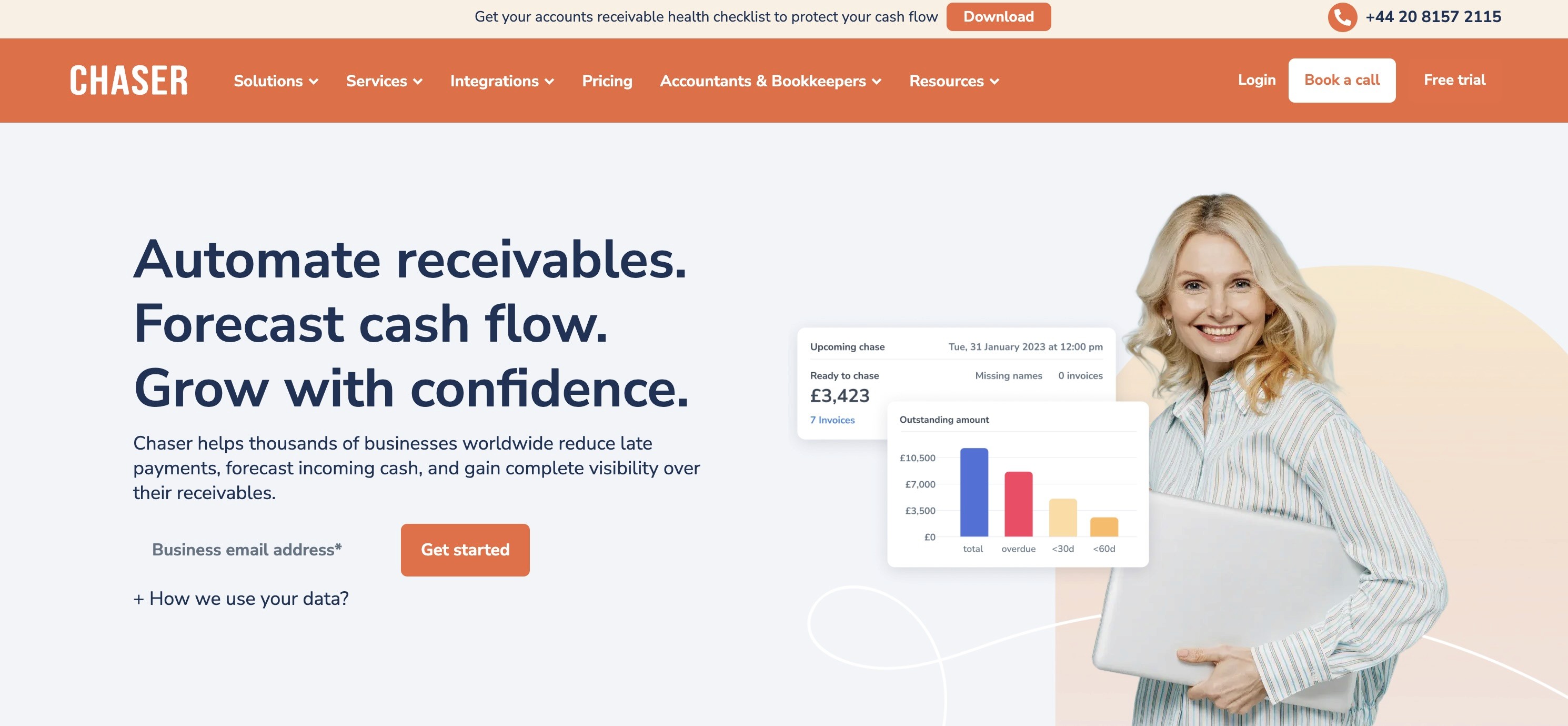
Chaser is a payment reminder tool designed for small businesses and micro-SMBs. It connects to Xero, QuickBooks, and other SMB accounting platforms, and automates payment reminders based on overdue invoices. Setup is fast, pricing is low, and the product focuses on sending reminders on schedule without the complexity of configuring multi-step dunning workflows.
Chaser does not match Gaviti's collections depth. It lacks the segmentation, cash application, task management, and dashboards that mid-market AR teams expect. But for teams whose invoice volumes do not justify a full collections platform, Chaser covers the basics at the lowest price point.
Like Gaviti, Chaser does not handle inbound billing queries automatically. AR teams manage billing queries manually.
For AR teams comparing Gaviti vs Chaser, the trade-off is capability for cost. Teams moving from Gaviti to Chaser are simplifying their collections operation rather than upgrading it.
Key features
Automated payment reminders, debtor management, payment portal, Xero and QuickBooks integration.
Pricing
Published on the website.
5. Tesorio: Cash Flow Forecasting and Collections
Best for: mid-market finance teams that prioritise cash flow forecasting alongside basic collections automation.
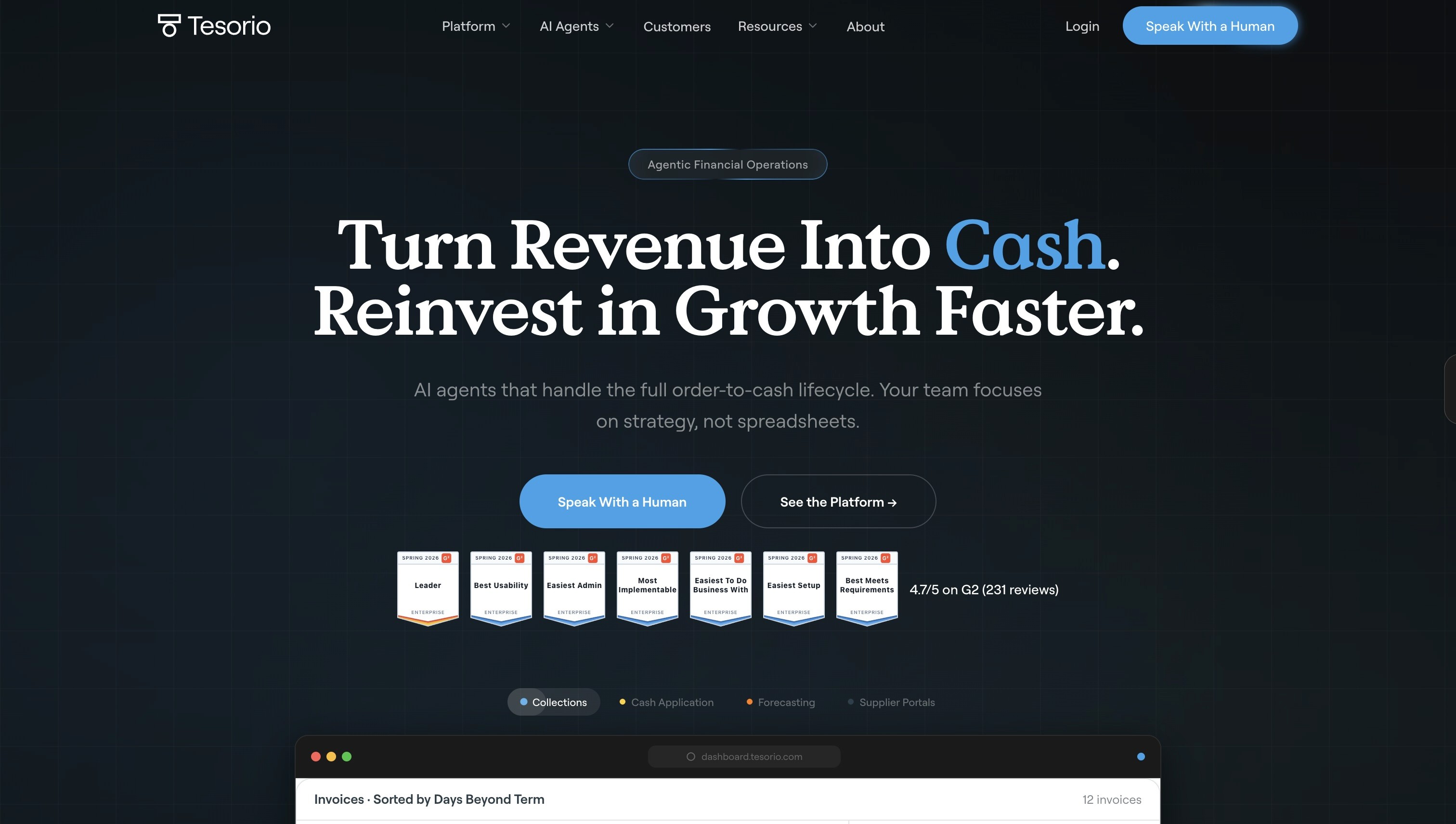
Tesorio is a collections and cash flow platform serving mid-market companies, with particular traction in the SaaS and technology sector. Its differentiating feature is cash flow forecasting, providing finance teams with projections of expected cash inflows based on AR data and payment patterns. Where Gaviti's strength is matching payments to invoices through cash application, Tesorio's strength is projecting when future cash will arrive.
The platform automates payment reminders and includes collections workflow management.
Like Gaviti, Tesorio does not handle inbound billing queries automatically. AR teams manage billing queries in a shared inbox or ticketing system.
For AR teams comparing Gaviti vs Tesorio, Gaviti provides stronger cash application and dunning workflows. Tesorio provides stronger cash flow forecasting and treasury planning tools. Neither handles inbound billing queries or the full collections conversation.
Key features
Cash flow forecasting, collections workflows, AR dashboards, receivables prediction, payment tracking.
Pricing
Available on request.
6. Invoiced: Billing and Collections with Analytics
Best for: Mid-market companies that want AR analytics and cash flow forecasting alongside billing and basic collections.
Invoiced is a billing and collections platform covering invoicing, payment reminders, and AR management. Its analytics and cash flow forecasting give finance teams visibility into receivables performance and payment trends. Invoiced extends beyond pure collections into invoice delivery and payment processing, which makes it a broader platform than Gaviti for teams that need billing and collections in one tool.
Like Gaviti, Invoiced does not handle inbound billing queries automatically. AR teams manage billing queries manually.
For AR teams comparing Gaviti vs Invoiced, Gaviti offers deeper dunning workflows and cash application. Invoiced offers broader billing and invoicing capabilities alongside analytics. The choice depends on whether the team needs a dedicated collections tool or a combined billing and collections platform.
Key features
AR analytics, cash flow forecasting, invoicing, payment reminders, collections dashboards, payment processing.
Pricing
Published on the website.
7. Upflow: Mid-Market Collections with Strong Reporting
Best for: mid-market SaaS and technology companies that want strong AR reporting alongside basic collections automation.
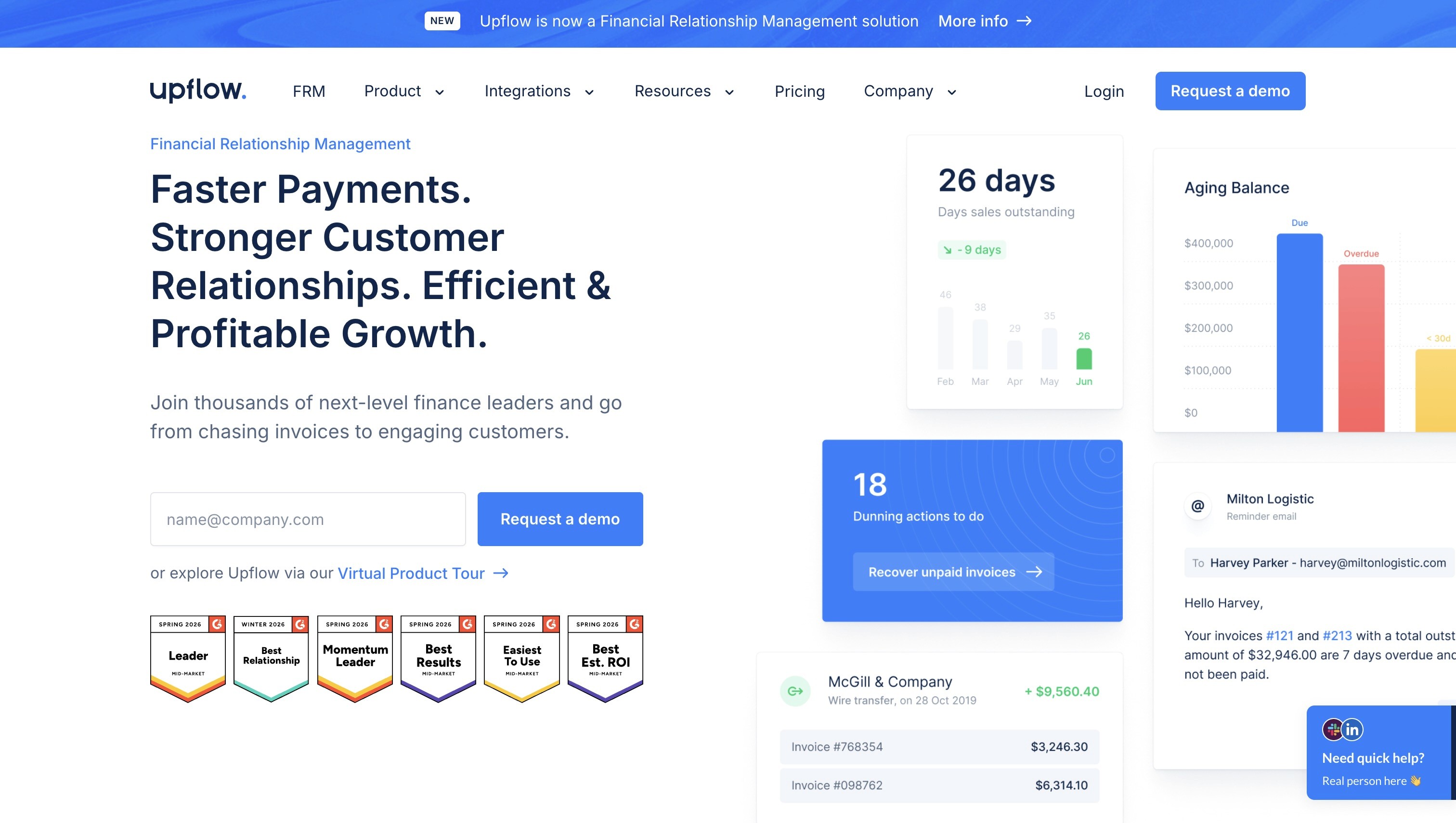
Upflow is a French-founded collections platform launched in 2016, serving mid-market B2B companies with particular traction in SaaS and technology. Where Gaviti leads with cash application and structured dunning workflows, Upflow leads with reporting and AR analytics. Upflow gives finance teams detailed dashboards showing AR performance, ageing trends, and collections activity. Its internal collaboration features let team members tag colleagues and comment on accounts to coordinate collections work.
Upflow automates payment reminders through rule-based workflows. Like Gaviti, the AR team maps out collections sequences and the system sends them on schedule. Upflow pricing is not publicly available.
Like Gaviti, Upflow does not handle inbound billing queries automatically. AR teams manage billing queries in a shared inbox or ticketing system outside of Upflow.
For AR teams comparing Gaviti vs Upflow, both serve the mid-market and share the same rule-based architecture. Gaviti offers stronger cash application. Upflow offers stronger reporting and analytics. Neither handles inbound billing queries or the full collections conversation.
Key features
Rule-based collections workflows, AR reporting and analytics, internal collaboration, payment portal, customer timelines.
Pricing
Custom quote required.
8. Versapay: Digital Invoicing Portal with Flexible Payments
Best for: B2B companies where payment friction is the primary DSO driver and customers would benefit from a self-service invoicing and payment portal.
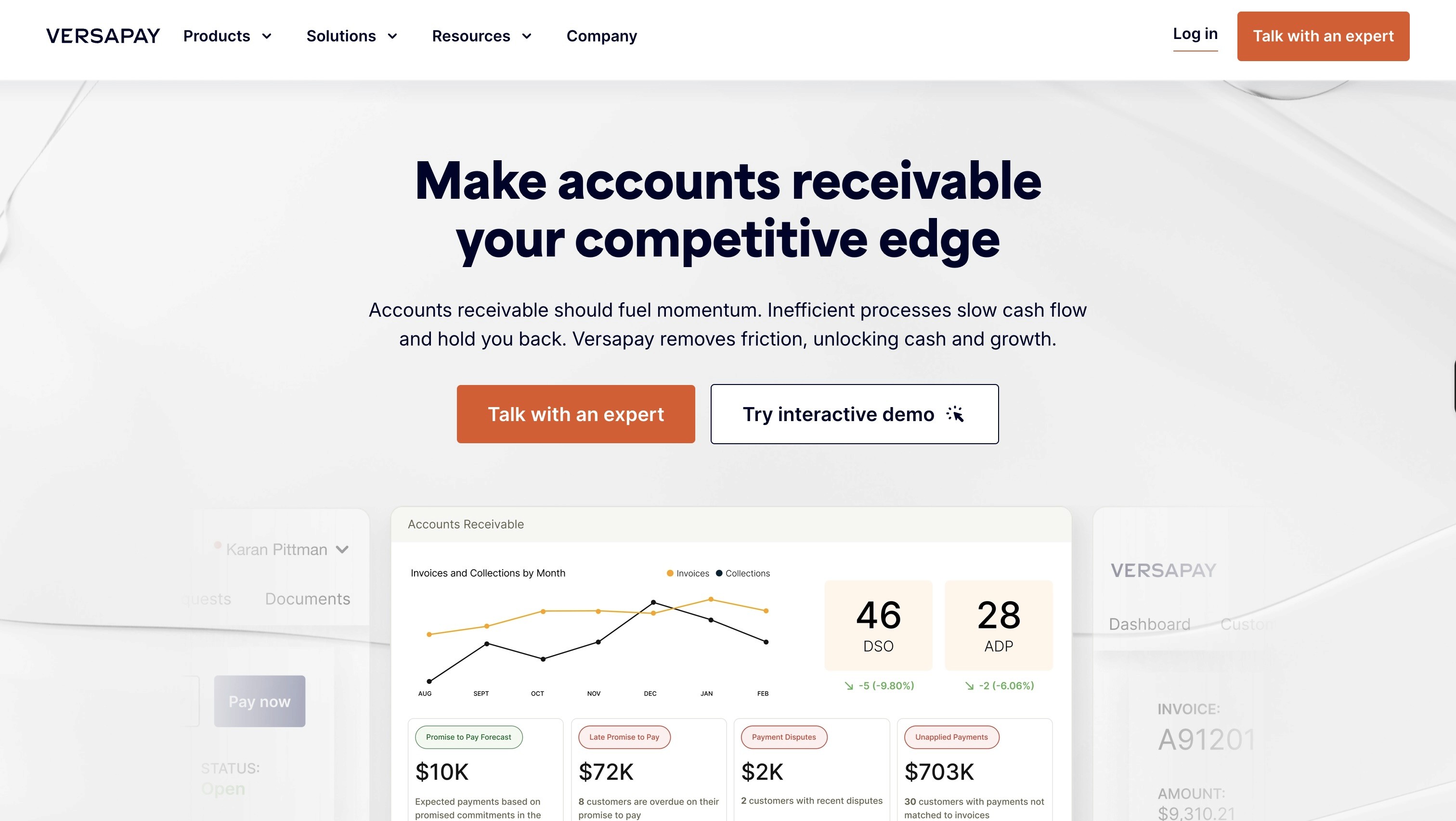
Versapay is a collections and invoicing platform founded in 2006, built around a digital invoice presentment and payment portal. Its core strength is offering flexible payment options through a self-service interface where customers can view invoices, select payment methods, and pay directly. For AR teams where payment friction causes more late payments than process gaps, Versapay addresses the problem at the point of payment rather than the point of collections.
The platform automates payment reminders and provides AR dashboards and collections workflows.
Like Gaviti, Versapay does not handle inbound billing queries automatically. The portal gives customers a place to pay, but when a customer has a question about an invoice, a PO discrepancy, or a dispute, the AR team handles that manually.
For AR teams comparing Gaviti vs Versapay, Gaviti offers deeper dunning workflows and cash application. Versapay offers a stronger invoice presentment and payment portal with flexible payment options. The choice depends on whether the bottleneck is collections process or payment friction.
Key features
Digital invoicing portal, flexible payment options, payment reminders, AR dashboards, collections workflows.
Pricing
Available on request.
Chatbots, Copilots, and AI Agents: Understanding the Difference in AR Software
Many collections platforms now describe parts of their product as AI-powered, but that label can cover very different types of functionality. Some tools include chatbots that help users query AR data more quickly. Others offer copilots that support parts of the workflow, such as drafting emails or suggesting next actions. These features can be useful, but they are not the same as AI agents built to handle collections work directly.
According to the Association for Financial Professionals, much of accounts receivable automation has historically centred on structured, rules-based tasks, which is why finance teams should look past the AI label and focus on what category of work a platform actually automates.
What are chatbots in AR software?
Chatbots are there to help users get answers more quickly. Instead of digging through dashboards, an AR team member can ask a question and get the information straight away. In Gaviti’s case, that is what the AI chatbot is doing. It helps users query AR data faster, but it is not contacting customers, resolving billing queries, or managing disputes.
What are copilots in AR software?
Copilots help people do the work more efficiently. They might help draft an email, suggest what to prioritise, or speed up setup. The work is still being done by the AR team, but with a bit more support from the software.
What are AI agents in AR software?
AI agents are built to handle the work itself, not just assist with parts of it. In accounts receivable, that can mean reading a billing query, checking invoice and payment history, reviewing the conversation thread, replying to the customer, and escalating when human judgement is needed. The team is still involved, but more in reviewing and overseeing than doing each step manually.
That is the model Paraglide is built around. Its AI agents handle receivables work across collections, billing queries, disputes, deductions, and follow-up, so the team is not just getting help with reminders or drafts, but support with the actual day-to-day work that sits behind payment collection.
Chatbots vs Copilots vs AI Agents in Accounts Receivable
Category | What it does | What it does not do | Human role | Example in AR |
|---|
Chatbots in AR | Answers questions about receivables data | Does not move work forward with customers | The human asks, interprets, and acts | Looking up overdue balances or payment trends |
Copilots in AR | Assists with parts of the workflow | Does not own the task from start to finish | The human still carries out the work | Drafting emails, suggesting actions, or helping with setup |
AI agents in AR | Carries out receivables work across billing queries, collections, disputes, and follow-up | Does not remove the need for human oversight | The human approves, monitors, and handles exceptions | Paraglide’s AI agents managing billing queries and collections conversations |
How to Choose the Right Gaviti Alternative or Competitor
The right choice depends on what is actually slowing your AR team down. Before comparing vendors, it helps to ask a few practical questions:
Is the main problem outbound reminders, or everything that happens after the customer replies?
Are billing queries, disputes, and document requests still being handled manually in a shared inbox?
Do your current workflows rely too heavily on fixed rules and preset sequences?
Is your team spending too much time maintaining dunning logic instead of moving cases forward?
Do you need stronger credit risk management and DSO visibility across the ledger?
Is better reporting and AR analytics the main gap in your current setup?
Are you trying to simplify the process and reduce software cost?
Do you need better cash flow forecasting alongside collections activity?
Would a self-service invoice and payment portal reduce payment friction for customers?
Is the real bottleneck sitting between the reminder and the payment, rather than the reminder itself?
These questions usually make the shortlist much clearer, because they help separate teams that need a better reminder workflow from teams that need broader support across billing queries, collections conversations, disputes, and day-to-day receivables work.
For high-volume finance teams that are stuck manually chasing invoices and dealing with constant billing queries in the finance inbox, Paraglide is the strongest alternative to Gaviti. Its AI agents take on the work directly, helping teams save time, reduce manual effort, and reduce DSO.
Why Listen to Us?
Paraglide was not built by software engineers guessing at what AR teams need. It was founded by a former CFO and an accounts receivable manager who spent years running large AR teams at a global technology business. They have direct, operational experience managing collections across hundreds of customer accounts, evaluating and implementing multiple AR platforms, and living with the limitations that every platform on this list shares: outbound automation that stops at the reminder, leaving the billing queries and conversations to the team.
That experience is why Paraglide was built differently. The founders did not set out to build a better reminder tool. They built the platform they wished they had when they were managing AR themselves, one that handles the full conversation, not just the first message.
Paraglide is backed by Bessemer Venture Partners, a world-leading AI investor whose portfolio includes Anthropic, Perplexity, Shopify, and Twilio. Bessemer backed Paraglide because the product addresses a problem that the existing AR software market has left unsolved for over a decade: the inbound billing conversation.
The platform is live, processing real AR conversations for B2B companies, and delivering a 34% average DSO reduction, not through better predictions or more reminders, but through faster resolution of the issues that actually block payment.